Designing an AI companion that turns the goals you set into habits, and the habits into time actually blocked on your calendar.
What is Flooa /
Trail Hub?
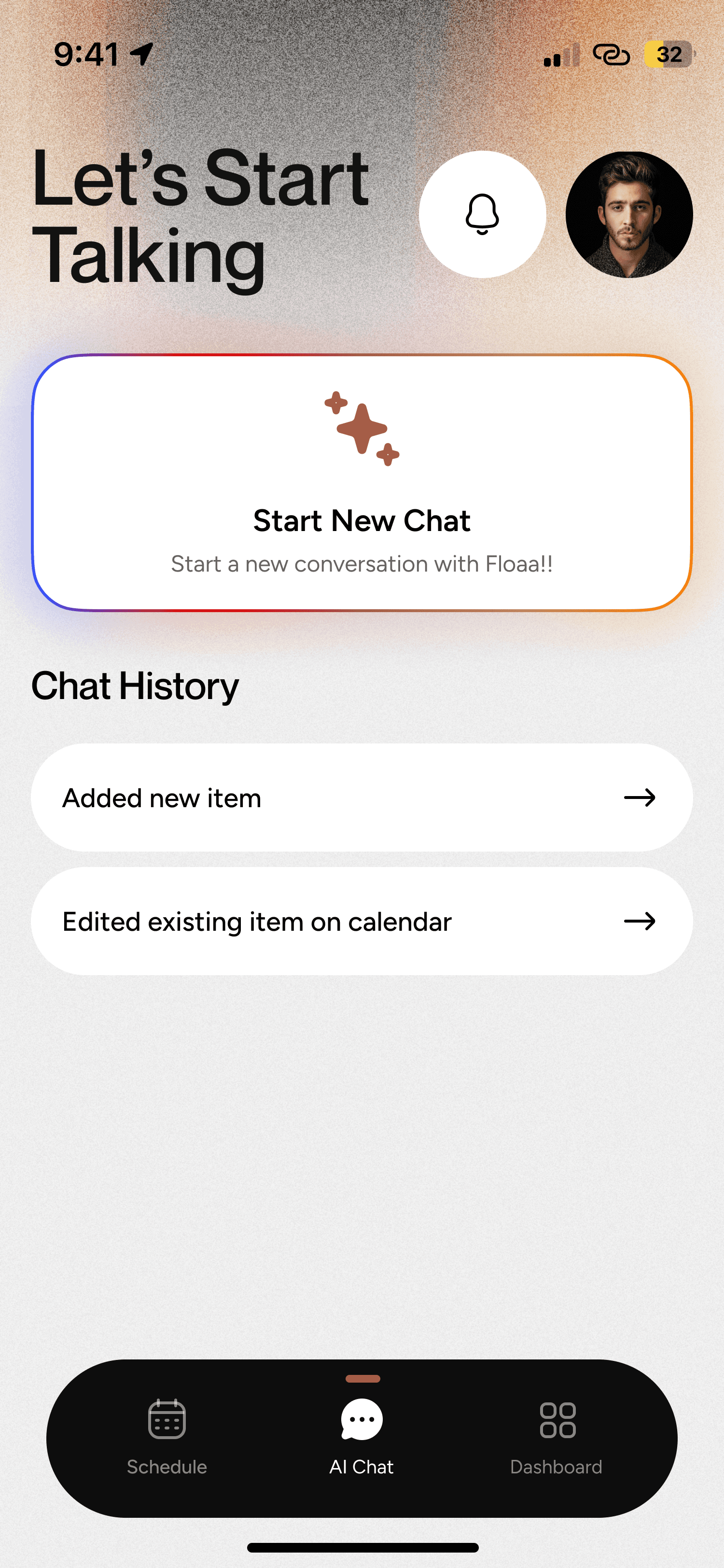
Flooa is an AI-driven goal and habit platform. A user signs up, defines what they want to change, and the system builds the path to get there recommending the habits that serve that goal, allocating them into real slots around existing commitments, and monitoring progress continuously so the plan adapts as life does.
AI Management
Goal Setting
Habit Building
Smart Calendar

The
Problem
Why setting a goal is easy and keeping it is not?
“Everyone knows what they want to change. Almost nobody knows what Tuesday at 7pm is supposed to look like because of it.”

One user.
One goal that has to survive a real week.
Flooa was designed around a single user type someone who knows what they want to change but has no system for turning that into specific habits and protected time. Every decision in the product traces back to closing that gap.

The
Self-Improver
Kiran
27 years old
Goals
Kiran wants to lose weight but has no idea how that translates into a week. He wants something that decides the specifics for him which exercise, how often, and at what time it fits around work so that the only decision left is showing up.
Frustrations
Every app he has tried stops at the goal. It congratulates him for setting one, then leaves him to build the routine, find the time and stay honest about it alone. Without a slot in his actual calendar, the intention quietly disappears within a fortnight.




Four calls that shaped the product
The goal is the only thing the user has to define
Onboarding asks for a goal in plain language, not a configured routine. Everything downstream which habits are suggested, how often they recur, where they sit in the week is derived by the system. The design deliberately refuses to make habit-building the user’s homework.
Recommendations land as slots, not suggestions
An AI suggestion that does not occupy time gets ignored. Every recommendation is surfaced already attached to a proposed slot in the user’s real calendar, positioned around existing commitments, so accepting it is one action rather than a planning exercise.
One calendar for work and for personal goals
Goal habits and existing commitments live in the same view rather than a separate wellbeing tab. This was the decision that made non-work goals like family time defensible if protected time is not visible beside meetings, it loses every conflict by default.
The AI reports in sentences, not dashboards
Monitoring runs continuously, but the output is written as plain-language signals about what is working and what has slipped, followed by a proposed adjustment. The user reads a conclusion and responds to it, rather than being handed charts and asked to diagnose themselves.
Open for new
opportunities
Senior UI/UX Designer

dileep kumar m
Call : +91 8296848384
Mail : itsdileepkumarm@gmail.com




Designed by Dileep Kumar M
©2026 all copyrights are reserved