Designing a mentorship platform from scratch where seeking guidance feels like a coffee chat, not hiring a consultant.
AOC is a mobile platform connecting people who need guidance with experienced individuals who want to give back — in a way that feels human, not transactional. Built entirely from scratch, the product prioritised social discovery, low-pressure communication, and a warm visual identity that made the whole experience feel like its name.
Social Platform
Career Guidance
Knowledge Sharing
1:1 Interaction

The
Problem
Why existing platforms were failing people?
Every mentoring platform on the market approached the problem the same way as a marketplace. Pricing upfront. Profiles that read like LinkedIn resumes. A booking flow borrowed from SaaS scheduling tools. The result was predictable: advisees felt unqualified to even reach out, and advisors felt reduced to an hourly rate.
"Every mentoring platform felt like scheduling a doctor's appointment calendar-heavy, impersonal, transactional. Reaching out felt like sending a job application."
The problem wasn't a missing feature. It was a missing feeling. People don't seek advice from strangers through systems they do it over coffee.

Two personas.
Two completely separate journeys.
AOC was built for two distinct user types from day one. The entire product architecture not just the UI was designed around the difference between them.

The
Advisor
Riya
31 years old
Goals
Riya wants to share what she's learned without it becoming a second job. She's looking for a space where she can offer guidance on her own terms seeing who wants to connect, deciding when she's available, and feeling like a mentor rather than a service provider.
Frustrations
Other platforms bury her under admin pricing configs, booking confirmations, calendar sync emails. She also gets no sense of who she'll be talking to before accepting a session, which makes the whole thing feel impersonal and one-sided.

The
Advisee
Wade
24 years old
Goals
Arjun isn't looking for a polished expert he wants someone real he can actually talk to. His goal is to find a person who's walked a similar path and start a conversation that feels low-pressure, genuine, and honest rather than formal or transactional.
Frustrations
Seeing pricing before he even knows who the person is makes him feel like a client, not a human. Profiles that read like resumes give him nothing to connect with, and the act of "submitting a request" kills any sense that he's just reaching out to someone.


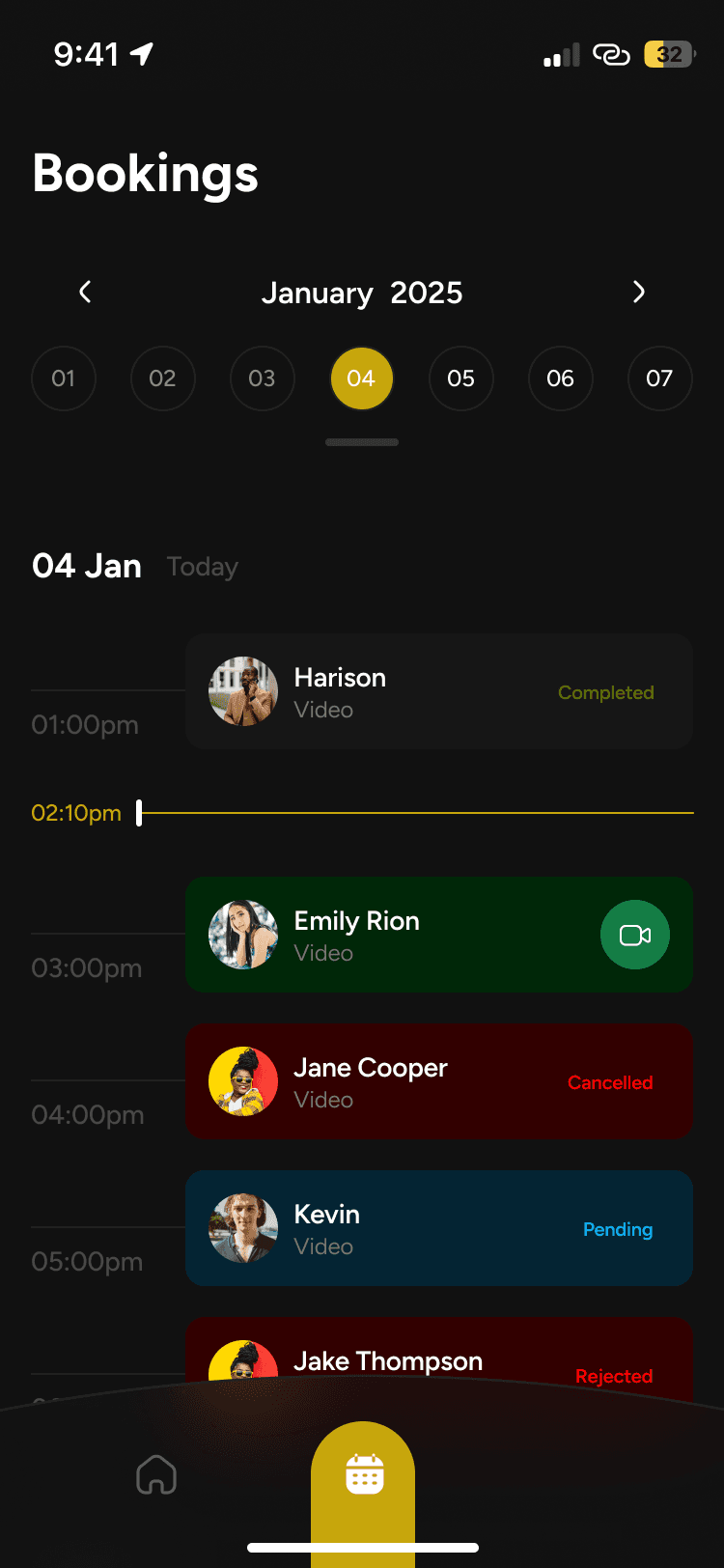


Four calls that shaped the product
Persona split at the very first screen
The "I'm an Advisor / I'm looking for advice" choice happens on entry not buried after onboarding. This wasn't cosmetic. Every screen downstream was built specifically for one persona. No patching, no generic flows trying to serve both.
Card-based discovery over directory listings
Advisors are surfaced like people, not product listings. Full portrait, name, title, and a one-line personality hook — all before any pricing. Inspired by social browsing behaviour, not LinkedIn search results.
Microcopy treated as a design element
"Book a session" over "Schedule" or "Hire." "Start a conversation" over "Submit a request." Every label was rewritten with the same intention as the visual design to make reaching out feel human, not like filling a form. Language was the first friction point on every screen.
Interactions designed to feel physical
Navigation uses gestures instead of taps. Advisor cards are swipeable and draggable, resembling real cards. The nav bar is clickable with feedback, and the menu opens with a pull-down gesture, keeping the interface clean and navigation tactile.
Open for new
opportunities
Senior UI/UX Designer

dileep kumar m
Call : +91 8296848384
Mail : itsdileepkumarm@gmail.com




Designed by Dileep Kumar M
©2026 all copyrights are reserved